The incident in which an Australian Vietnamese expatriate was temporarily barred from departing at Noi Bai International Airport (Hanoi) on September 12, 2026—simply because of an overpayment of 40,000 VND in taxes from an old business record that had been inactive for over a decade—has caused a public uproar.
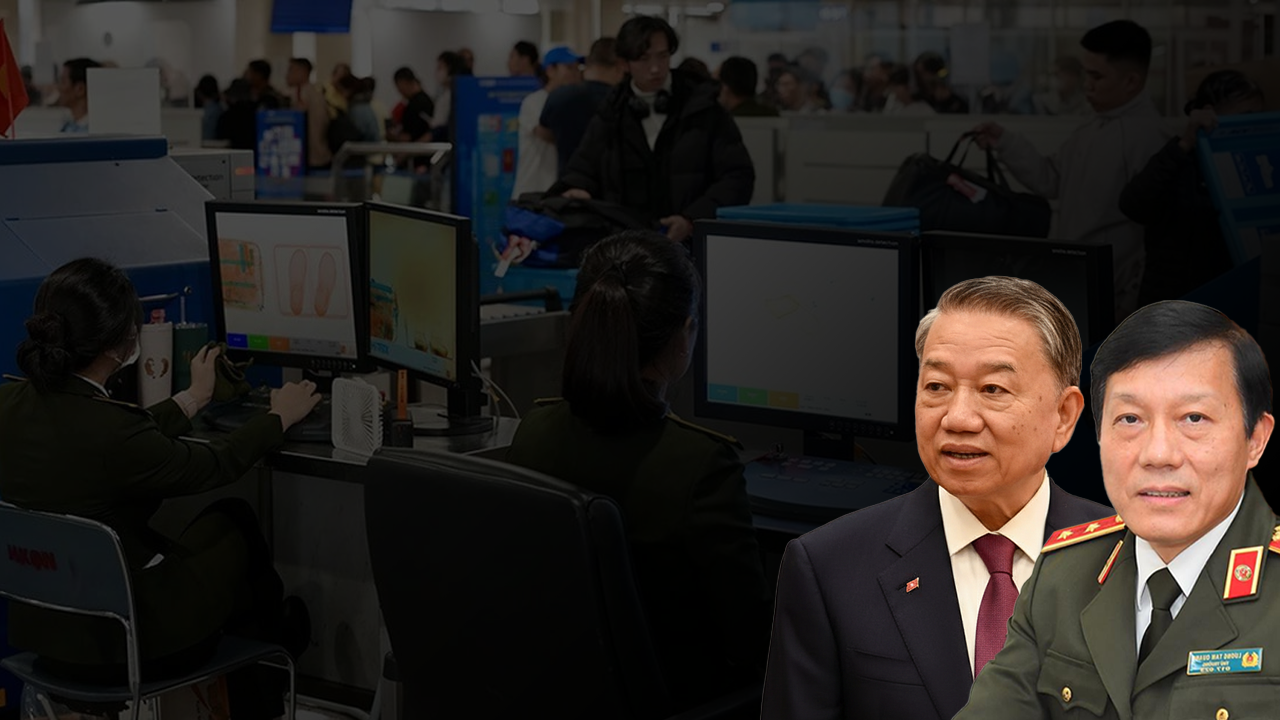
This is a telling sign of serious flaws in the management mindset and the rigidity of Vietnam’s government bureaucracy, where enforcement measures are applied indiscriminately and without proper oversight.
In terms of the amount, 40,000 VND is an extremely small sum. Yet, to resolve this issue, the entire administrative system of the state apparatus has consumed a massive amount of social resources.
It is understood that this taxpayer’s family had previously fully complied with their obligations, paying nearly 5.3 million VND in taxes and late fees as notified.
However, simply because of an overpayment of 40,000 VND originating from the former tax authority—due to a change in its name and management model—the case had to be escalated to the city level for verification.
Notably, this incident left a Vietnamese-Australian citizen stranded at the border checkpoint due to a verification process that dragged on for half a month, accompanied by numerous unnecessary complications.
This situation highlights a severe imbalance: the compliance costs borne by citizens and the administrative costs incurred by the government are many times greater than the actual value of the overpayment.
From the perspective of modern tax administration, this situation highlights the urgent need to shift from a “burdening the public” mindset—where citizens are forced to prove errors they did not cause—to a system of automation and data reconciliation.
Although Decree 252/2026/NĐ-CP has begun to demonstrate a spirit of streamlining procedures by exempting business households with tax liabilities of 50,000 VND or less from taxation, the system still faces shortcomings regarding tax arrears of less than 50,000 VND!?
Inconsistencies in administrative management are not limited to tax procedures but also stem from a lack of coordination among government agencies.
Delays in updating information between the tax authorities and the Immigration Police have distorted the effectiveness of legal tools in the digital age.
Citizens who have fulfilled their financial obligations still face the anxiety of being detained at border checkpoints due to a lack of necessary data interoperability in the information management process.
However, the most concerning aspect lies in how the temporary departure suspension measure is implemented. This is because it is a special enforcement tool that directly impacts the freedom of movement—a fundamental right of citizens protected by the Constitution.
The application of this tool to minor tax obligations—and even to individuals who have overpaid taxes—has exposed the lack of coordination between tax authorities and border police.
Recent developments show that the list of individuals barred from leaving the country is expanding excessively, including business leaders who owe just a few thousand dong. This abuse blurs the line between protecting budget revenue and violating citizens’ rights.
When enforcement measures are triggered automatically without any review of their reasonableness, government management tools can easily become a psychological burden on the public.
A modern public administration cannot rely on threatening or inconveniencing citizens with administrative barriers that the government itself has imposed.
Public opinion holds that it is time for the Ba Dinh leadership to reevaluate the boundaries of establishing control “checkpoints” in order to innovate and build a smart mechanism for handling financial obligations.
This would not only help streamline the government’s administrative apparatus in the New Era but, more importantly, protect the trust of citizens and the overseas Vietnamese community in the transparency of the law.
Trà My – Thoibao.de